Vision and Goals
I have always been deeply inspired by the power of photography. My artistic vision is rooted in the masterworks of Henri Cartier-Bresson, Sebastião Salgado, Vivan Mayer, Ansel Adams, Bruce Davidson and Robert Capa, amongst many others. In the modern era, Instagram has also proved itself to be an invaluable, constant stream of exceptional content that fuels my creative inspiration. Technically speaking, my core objective is driven by the principles of photojournalism - the intersection between storytelling and documentation. I consider the book ‘The Best of LIFE Magazine’ to be a personal pandora’s box; once opened, it unleashed an enduring fascination with this style of visual communication. Whilst I may not be an accredited photojournalist myself, I consistently strive to incorporate these principles into every image I create. By approaching street scenes and natural landscapes with this mindset, I get closer to the heart of the journalistic narrative. Putting this cap on my lens steers me into finding a deeper truth of the moment, the place, or the person.
The Artistic Process
My approach begins with a singular pursuit: to capture interesting composition, dynamic energy, or a compelling story with limited need for words. I believe that photography, at its core, has the true power to freeze a moment in its purest, most unaltered form. This conviction is the justification for constantly gravitating toward producing work on analog film. By relying on film, I embrace a workflow that requires no heavy editing and limited post-processing. The final photograph remains somewhat intrinsically tied to that specific point in time. One the most exciting aspects of this work is the element of rediscovery. When you shoot on a negative, you cannot see the photo straight away. It is held captive by the rays of light in its blackbox. Release it, and these moments will burn away, forever. Having built a substantial bank of photographs over the past ten years, I can resurface images that can be seen with fresh eyes. This resurfacing is most profound when I find undeveloped rolls of films from years past. Watching the negative go through the developing process is similar to observing life emerge from the physics of time. When it appears on the silver paper, this brings me a deep sense of excitement and purpose: to keep collecting, storing, and documenting fleeting moments. This, for me, is the true magic of photography - writing light so that it remains fixed on the canvas of time.
How I Work
The street is, without doubt, a fantastic place to capture special moments and genuine shots. None of my photos are staged, apart from a handful of portraits. All these photographs are captured in the spur of the moment, without any form of intervention on the composition. My typical process involves a simple method: wandering. I usually immerse myself in an environment, and I let the shots compose themselves as they come. Similarly, travelling provides an excellent medium to foster creativity. When one is equipped with a camera, the world seem to unfold, and the images appear almost on their own. My work is an exercise of being present, allowing the dynamics of the location - whether that is the buzz of a city or the quiet vastness of a landscape - to dictate the narrative. It is also worth noting that I lean heavily on monochromatic, black and white composition. I believe the absence of colour factors greater intent into composing a photo. I have, generally speaking, been significantly more involved into this type of shooting. But ultimately, this boils down to a personal choice. You will notice the vast majority of my portfolio is produced in black and white, but you will nonetheless find a handful of shots that are taken on colour film. Sometimes, colour does speak louder than light.
Cameras
My toolkit is a mix of classic analog precision and modern digital convenience, built to suit a variety of situations. My primary setup consists of three cameras: one digital and two analog. My most cherished camera is the Leica M3 paired with flexible four prime lenses (30/50/90/120mm) which allows me to capture a full range of scenes. My second analog companion is the Zenit TTL fitted with a 48mm Helios lens. For digital capture, I rely on a Pentax K3 which is also supported by its own variety of lenses. While film remains my preferred medium, there is nonetheless a handful of pieces captured with my Pentax and Zenit back up. Simply put, I cannot risk my full analog kit everywhere I go (my first film camera was a fantastic Praktica LTL3, but was unfortunately stolen abroad, with three great rolls also!).
Darkroom Equipment
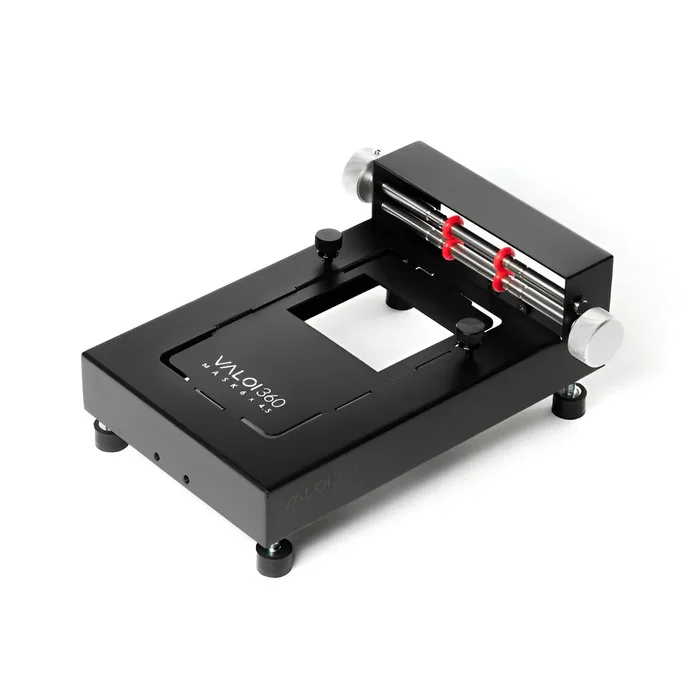
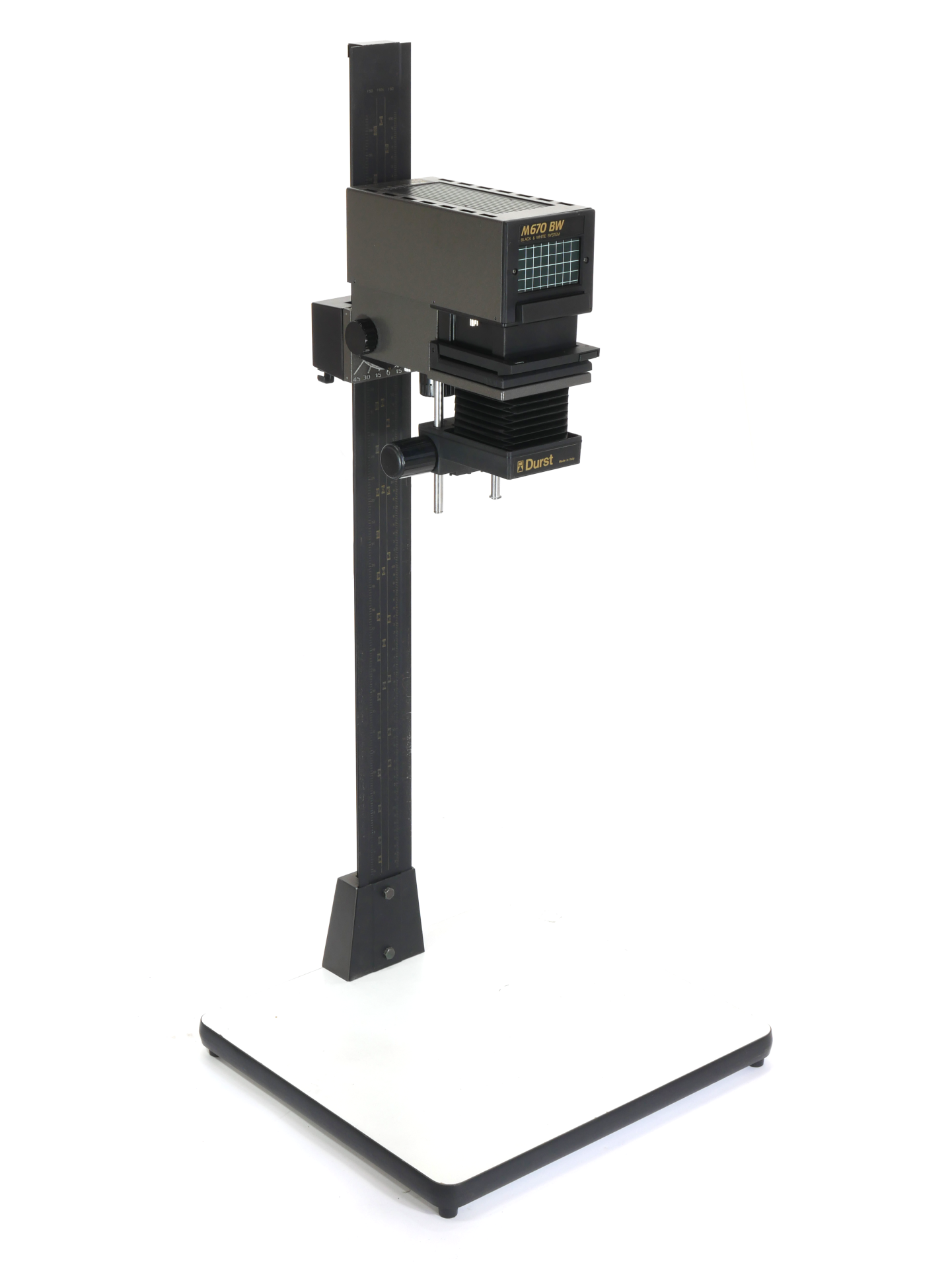
The commitment extends beyond the camera and into the final print. For the sake of having full control over the production - and a little bit for my wallet - I develop and print the majority of my film photos at home. The heart of my analog lab is the Durst enlarger (as seen in the accompanying image). This fantastic piece of equipment has been an invaluable tool, allowing me to fully immerse myself into the world of analog photography. It provides all the necessary controls to transform a negative into a tangible print, ensuring I have full independence over the creative process. For the savvy, I also scan my negatives using a Valoi Advancer Scanning Kit (also pictured on the right) using a light board and 90mm prime lens on my K3. This piece of equipment allows me to scan my negatives seamlessly which I then post-edit in Lightroom.
This hands-on approach means that every photograph you see has been personally crafted from start to finish.
If you have a particular shot that sparks your interest in my collection, please don’t hesitate to fill out the contact form. I would be delighted to find the negative and create a unique, hand-printed piece for you.
Ethical Practice and Consent
My commitment to street photography is built on a foundation of respect and a strong ethical framework. I aim to capture authentic moments without infringing on the privacy or comfort of the people I photograph. When working in public spaces, I operate under the principle of implied consent. If I take a photograph and the individual(s) does not react in any discernable manner, I take the silence as a form of allowance to capture the moment.
However, my boundaries are absolute:
I have never, and will never, under any circumstance, photograph someone in a private setting (such as a home, apartment, workplace) without their prior, explicit consent.
I have never, and will never, publish a photograph of someone that could put their image to detriment or be used against them.
On a handful of occasions when someone has approach me to express their discomfort with being photographed, I have always respected their wishes immediately with calm, resolute, collaboration. In these instances, I have always abstained from publishing the photo. My integrity and the comfort of my subjects will always take precedence over the desire for a single image.
A Note on Privacy and Consent
Your comfort and privacy are paramount. If you recognise yourself in any photograph published on this site or my instagram account (@thomasprudensen) and are not comfortable having it viewable online, please don’t hesitate to get in touch via the contact form.
We can discuss your concerns immediately, and I will ensure the photo is addressed according to your wishes.